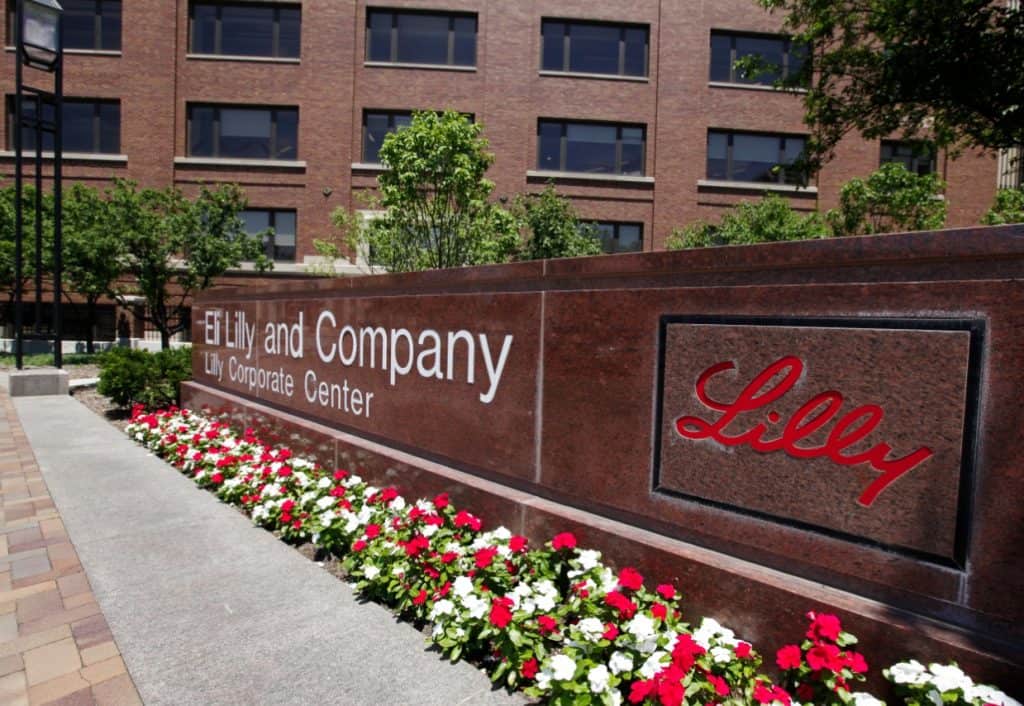
Lilly abandons RA drug
pharmafile | February 8, 2013 | News story | Research and Development, Sales and Marketing | RA, lilly, tabalumab
Lilly is abandoning its late-stage trial into investigational rheumatoid arthritis (RA) drug tabalumab but insists the move has nothing to do with safety.
The compound, an anti-BAFF (B cell activating factor) monoclonal antibody, simply does not work in RA and will now cost Lilly $50 million in this quarter’s accounts as an R&D expense.
The manufacturer says that the ongoing Phase III ILLUMINATE study for tabalumab in systemic lupus erythematosus, will continue.
“While we are obviously disappointed by these results in RA, we continue to believe that tabalumab could have significant potential for patients in other disease areas,” said Eiry Roberts, vice president of autoimmune product development at Lilly.
The signs were already there that efficacy was a problem: in December Lilly stopped its Phase III RA registration study FLEX-M of tabalumab due to lack of treatment effect.
FLEX-M was looking at the drug in patients with moderate-to-severe RA who had an inadequate response to methotrexate therapy.
An interim futility analysis was then conducted of the FLEX-V study, in which patients with moderate-to-severe RA with an inadequate response to one or more tumour necrosis factor (TNF) inhibitors, were administered tabalumab.
As a result, Lilly says all ongoing Phase II and III RA studies of the drug will be stopped but is putting a brave face on it.
“Autoimmune disorders are highly individualised,” Roberts continued. “We believe that targeting BAFF with a molecule such as tabalumab may still represent an important advance for patients.”
This hope is the reason that the lupus programme has been spared the axe – and tabalumab in combination with bortezomib is still being looked at in Phase II studies for patients with previously-treated multiple myeloma.
Finding RA treatments is fraught with difficulties: AstraZeneca received its own blow in December when its oral drug fostamatinib failed to prove non-inferority in its own Phase IIb trial against Abbott’s Humira (adalimumab).
Fostamatinib, the first oral SYK (spleen tyrosine kinase) inhibitor in development as a novel therapeutic approach for RA, is thought to reversibly block signalling in multiple cell types involved in inflammation and tissue degradation in the disease.
But AstraZeneca’s OSKIRA-4 study did not meet its second primary objective because all fostamatinib monotherapy doses were inferior to Humira monotherapy at 24 weeks.
In some ways this is a more significant setback than Lilly’s: it had been hoped that fostamatinib, which performed solidly in Phase II, would challenge current RA blockbusters Humira, Pfizer’s Enbrel and Janssen’s Remicade, all of which are injections or infusions.
Meanwhile Lilly is highlighting a pipeline which has two other potential new medicines in late-stage development, including another compound for RA.
Baricitinib, a JAK1 and JAK2 inhibitor is being developed with Incyte Corporation, for RA, psoriasis and diabetic nephropathy, while ixekizumab is an anti-IL-17 monoclonal antibody for psoriasis and psoriatic arthritis.
Adam Hill
Related Content
NICE RECOMMENDS LILLY’S TIRZEPATIDE (MOUNJARO ®▼) FOR MANAGING OVERWEIGHT AND OBESITY IN FINAL DRAFT GUIDANCE
BASINGSTOKE, 5th December 2024 – Eli Lilly and Company announced today that the National Institute …

Lilly’s COVID-19 drug has EUA revoked in favour of combination therapy
The FDA have revoked Emergency Use Authorization (EUA) of Eli Lilly’s bamlanivimab drug for the …

Lilly’s ulcerative colitis treatment meets all key endpoints in Phase III trial
Eli Lilly’s mirikizumab treatment for ulcerative colitis (UC) patients has met the primary endpoints and …