
Breast cancer patients benefit from blogging
pharmafile | September 2, 2013 | News story | Medical Communications | blogging, breast cancer
Breast cancer patients who discuss their personal experiences with the disease online can help both the authors and their audience.
This is according to a new report, the first known study of its kind, in which UCLA researchers discovered that creating a personal website to record the cancer experience and communicate with one’s social network can reduce depressive symptoms, increase positive mood and enhance appreciation for life among women diagnosed with breast cancer.
The study was published in the Journal of Clinical Oncology and led by Annette Stanton, a member of UCLA’s Jonsson Comprehensive Cancer Center and a professor of psychology and of psychiatry and biobehavioural sciences.
“From our own and others’ previous research, we know that expressing emotions surrounding the experience and gaining social support can be helpful for people diagnosed with cancer, and we know that interpersonal interventions can be useful,” Stanton said.
“Our goal in this research was to provide a platform on which breast cancer patients could reflect on their experiences, as well as communicate with and leverage support from their existing social networks, especially friends and family.”
In Project Connect Online (PCO), a randomised trial conducted with 88 breast cancer patients between the ages of 28 and 76, participants were assigned either to a three-hour workshop led by Stanton and her colleagues in which the women created personal websites or to a control group that did not create websites.
In each workshop, the women learned about the potential uses of personal websites, such as expressing emotions related to cancer, providing medical status updates and letting others know what would be helpful.
They also proactively considered common concerns of website authors, including the pressure to be positive or eloquent and then engaged in hands-on website creation before going on to write their first posts.
“We worked closely with a website developer so participants had several choices for how their sites looked, but all sites had the same functions,” Stanton said. “It was inspiring to see women of so wide an age range and of such varied computer experience develop their websites in just a few hours.”
The women assigned to the PCO group found that their websites were particularly valuable for telling the stories of their cancer experiences, expressing emotions and reducing how much information they had to repeat for family and friends. Visitors to the websites also found them useful for providing updates on the authors’ health and for helping visitors feel emotionally close to the authors.
The researchers found the women in the PCO group demonstrated statistically significant improvement in depressive symptoms, positive mood and life appreciation. The effects were particularly strong for women in active medical treatment, most of whom had advanced disease.
Women are more often motivated to tell their stories, express cancer-related emotions, garner support and keep others informed during active medical treatment and the often unpredictable course of metastatic disease than they are once they have completed their cancer treatments, the authors said.
Ben Adams
Related Content

Novartis receives SMC approval for early breast cancer treatment
Novartis has announced that its treatment for early breast cancer, Kisqali (ribociclib), has received approval …
Micrima announces upcoming launch of new UK breast cancer assessment
Breast cancer remains one of the leading health threats to women over 35 in the …
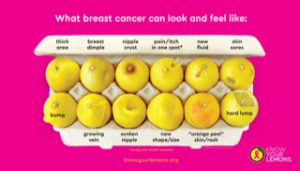
Pierre Fabre partners with Know Your Lemons Foundation for breast cancer awareness
The campaign focuses on early detection and education Pierre Fabre Laboratories has announced a partnership …