Sovaldi performs for Gilead
pharmafile | April 24, 2014 | News story | Sales and Marketing | Gilead, HCV, Q1, hepatitis C, sovaldi
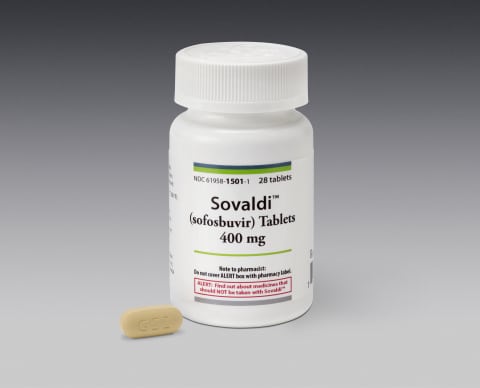
Gilead Sciences’ once-daily, oral hepatitis C treatment Sovaldi has returned better than expected figures in the first quarter of the year.
Sovaldi (sofosbuvir), which costs $1,000 per pill, was shown the green light from the European Commission in January, a month after being approved in the US.
It had sales of $2.27 billion in the first three months of 2014, beating an average of analyst estimates by more than $1 billion.
Bloomberg reports that one analyst, Mark Schoenebaum of ISI Group in New York, calls it the best drug introduction in history, saying sales were “above even the high end of buy-side expectations”.
However the drug’s performance is described, it meant Gilead revenues for the period rose from £2.53 billion in 2013 to $5 billion in 2014, with net profit also increasing to $2.23 billion (2013: $722.2 million).
The huge lift from Sovaldi meant that Gilead’s antiviral product sales increased to $4.51 billion for the first quarter of 2014, up from $2.06 billion.
Gilead says most patients will be treated with the drug for 12 weeks, resulting in a total list price of $84,000.
In February, Gilead announced it was taking the unusual step of licensing Sovaldi to a number of Indian generic pharma manufacturers, opening the door to lower-priced sales of the medication.
The drug is the first in a new class of medications known as nucleotide analogue inhibitors, or ‘nukes’, designed to block a specific protein that the hepatitis C virus needs to copy itself.
Gilead’s pill is the first treatment that has demonstrated safety and efficacy to treat certain types of HCV infection without the need for the use of the injectable interferon treatment.
The drug can be used in combination with ribavirin, an older antiviral pill, for patients with genotypes 2 and 3 infections, which account for about 28% of US patients infected with the virus.
But for patients with genotype 1 – which accounts for about 70% of US infections – the drug must still be used with both interferon and ribavirin, although it can be considered for use in patients with genotype 1 infections who cannot use interferon.
Patients with the much less common genotype 4 infections will also be treated with a three-drug combination.
It is a potentially lucrative area for manufacturers: the market for hepatitis C drugs could rise to being worth more than $100 billion over the next decade, according to Bloomberg Industries.
The viral disease – estimated to affect over three million Americans – causes inflammation of the liver and can lead to that organ’s failure. The virus can go on to cause bleeding, jaundice, fluid accumulation in the abdomen, infections or even liver cancer.
Adam Hill
Related Content

Gilead’s HIV treatment meets primary trial endpoint
Gilead has announced positive topline results from its phase 3 ARTISTRY-2 trial, which evaluated a …

Gilead announces first shipments of HIV prevention drug to Eswatini and Zambia
Gilead has announced the first shipments of its HIV prevention drug lenacapavir to Eswatini and …

Gilead shares phase 3 results from HIV prevention trial
Gilead Sciences has announced results from an interim analysis of its pivotal, phase 3 PURPOSE …