FDA advisors back female sexual disorder drug
pharmafile | June 5, 2015 | News story | Medical Communications, Research and Development, Sales and Marketing |
An FDA advisory panel has backed a new drug intended to boost female sex drive, but warned that it must carry safety warnings to reflect concerns about its side effects.
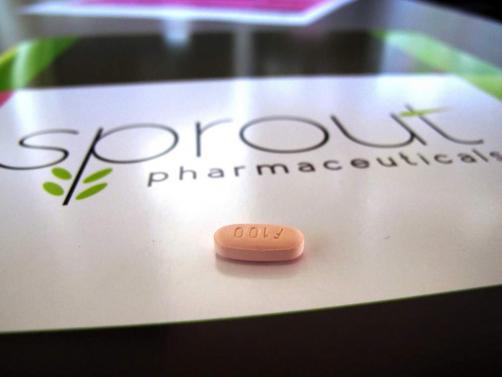
Two FDA advisory committees voted 18 to six in favour of recommending Addyi (flibanserin), a once-daily pill that women would take at night to treat hypoactive sexual desire disorder (HSDD).
Sprout Pharmaceuticals, the North Carolina-based company that owns Addyi, has seen two previous applications rejected by the FDA, in 2010 and 2013. Many objections centred on concerns about its side effects, which include fatigue, low blood pressure, dizziness and fainting.
Unlike drugs for men with erectile dysfunction, which affect the blood vessels, Addyi alters the brain chemistry by increasing dopamine and noradrenalin and reducing serotonin to improve sexual desire.
Another concern is that the drug’s effects are modest, with one clinical trial finding that women treated with Addyi experienced on average one ‘sexually satisfying event’ a month more than women given a placebo treatment. This prompted the panel to debate in its briefing document “the fundamental question [of] whether these observed placebo-corrected treatment effects outweigh the risks associated with treatment.”
But the FDA panel described this benefit as ‘numerically small but statistically significant’. At the FDA hearing women with HSDD who participated in clinical trials spoke about the impact the condition has had and their experiences of treatment. Their travel expenses were paid by Sprout.
The FDA panel voted to recommend the Agency approves the treatment, on the condition that Sprout develops a plan to limit its safety risks – something the firm has indicated it is willing to do.
“The unmet need seems to be so strong that even for a drug with rather modest benefit, I think approving the product with strong limitations seems to be the right step at this point,” Tobias Gerhard, a committee member and expert on drug safety at Rutgers University in New Jersey, says.
The FDA has faced accusations of sexism and gender bias during its review by women’s groups and others who started a campaign, backed by Sprout, called ‘Even the Score’. The campaign aims to “level the playing field when it comes to treatment of women’s sexual dysfunction.” The accusations were ‘firmly rejected’ and dismissed as ‘misleading and inaccurate’ by the FDA.
Susan Scanlan, the chair of the Even the Score coalition says: “Today, we write a new chapter in the fight for equity in sexual health.”
But Dr Adriane Fugh-Berman, director of PharmedOut, a campaign that questions the influence of pharma companies on medical practice, says: “To approve this drug will set the worst kind of precedent — that companies that spend enough money can force the FDA to approve useless or dangerous drugs.”
Lilian Anekwe