Hilary Clinton’s pharma ‘enemies’ amongst her biggest financial supporters
pharmafile | October 14, 2015 | News story | | Drug pricing, Hilary Clinton, US, pricing reform
Hilary Clinton’s plans to make waging war with pharma companies a central plank of her US presidential campaign have been dealt a blow by the revelation she has benefitted from hundreds of thousands of dollars in funding from the industry.
Clinton has vowed to bring in US reforms to prevent companies from ‘price-gouging’, and weighed into the row sparked by Turing Pharmaceutical’s sudden fifty-fold increase in the price of Daraprim.
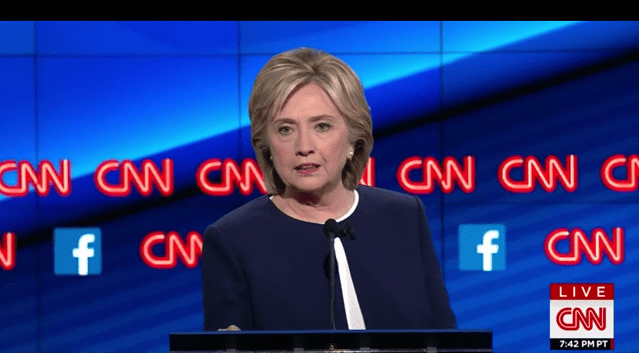
When asked during the Democratic candidates’ debate who she considered her career’s biggest enemies, Hilary Clinton some political points by naming drug companies and health insurance companies alongside the National Rifle Association, Iran and the Republicans.
But it appears pharma companies may not be quite as opposed to the frontrunner as she claims.
The International Business Times reports that pharma companies have been amongst the former Secretary of State’s largest financial supporters, beginning in 2008, when Clinton was among the top three biggest recipients of campaign cash from pharmaceutical-related companies.
This, according to data from the Center for Responsive Politics, which claims she received $738,000 from employees of pharmaceutical manufacturers and companies classified as ‘Pharmaceuticals/Health Products’, and over $1.2 million from the insurance industry including health insurance companies.
In addition, Clinton, her husband-former president Bill and their charity The Clinton Foundation have all benefited in monetary terms from their relationship with pharmaceutical and insurance companies.
Bill Clinton received $200,000 for a speech in 2011 from the Pharmaceutical Research and Manufacturers of America (PhRMA), which at the time was lobbying the State Department led by his wife on the Trans-Pacific Partnership. The deal has since been agreed and promises stronger patent protection for companies.
As secretary of state – a post she left in 2013 – Clinton was an advocate of the Trans-Pacific Partnership, although she stated last week that she was now opposed to the deal, saying “as of today, I am not in favour of what I have learned about it.”
In 2014, Hilary Clinton was paid a quarter of a million dollars by the Drug Chemical and Associated Technologies Association- whose members include large pharmaceutical companies- for a speech. Additionally, The Clinton Foundation has received up to $5 million in donations from Pfizer and Procter & Gamble, and from health insurers Humana and Blue Cross Blue Shield of North Carolina, some of which were made as recently as this year.
Joel Levy
Related Content
Coriolis Pharma opens new US headquarter and laboratory
Coriolis Pharma has opened a new US headquarter and laboratory at the Alexandria Center for …
Abselion establishes a US subsidiary in Massachusetts
Abselion has established a US subsidiary at The Engine in Cambridge, Massachusetts in the US. …
ESTEVE CDMO commences $15.5m expansion of US facility
ESTEVE CDMO, a global Contract Development and Manufacturing Organization (CDMO) specialising in small molecule active pharmaceutical …