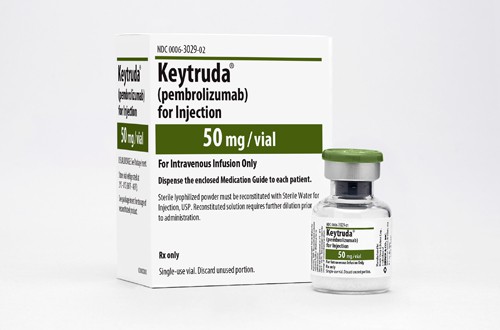
MSD’s Keytruda meets primary endpoint in triple-negative breast cancer
pharmafile | September 30, 2019 | News story | Sales and Marketing |
MSD have announced results from its Phase 3, KEYNOTE-522 trial that pathological complete response (pCR) in patients with early triple-negative breast cancer significantly increased from 51.2% in the placebo group to 64.8% for those given Keytruda in combination with chemotherapy.
The author of the study Peter Schmid said “we found a 13.6% difference which is a clinically meaningful benefit” when Keytruda was added to chemotherapy prior to surgery.
Further data showed that pCR was 68.9% for Keytruda for patients in the PD-L1-positive population, versus 54.9% for the placebo group, while in the PD-L1-negative population, the rates of pCR were 45.3% and 30.3%, respectively.
The researchers also conducted an interim analysis of event-free survival, the trial’s dual-primary endpoint, with results demonstrating a “favourable trend” for the Keytruda group with a 37% reduction in the risk of progression.
At 18 months, 91.3% of patients given Keytruda were event-free, compared to 85.3% on placebo.
Schmid added: “These are preliminary data, but they provide a strong sign that the addition of immune therapy to neoadjuvant chemotherapy prevents breast cancer recurrence. If we prevent recurrence, we cure more patients, but we need longer-term data for confirmation.”
In July, MSD had reported that the trial met its primary endpoint of pCR, noting that Keytruda is the first anti-PD-1 therapy to achieve this result as a treatment for triple-negative breast cancer.
The study itself enrolled a total of 1174 patients, with the interim analysis having been presented at the European Society for Medical Oncology (ESMO) coming up after a median follow-up of 15.5 months in the first 602 patients.
Nik Kiran